
AI Tools Expert & Founder
Table of Contents
Schema markup has never mattered more than it does right now, and the reason is simple: search has changed faster in the past year than in the previous decade.
Most searchers now find the full answers they want straight from the AI-generated answer at the top of the page.
In this new search environment, traditional SEO with plain text alone is no longer enough to stay visible.
AI search engines don't read content quite like humans do. They begin with the strongest early clues—the slug URL and meta title—to quickly understand what your page is about.
Then, they turn to schema markup and structured data for deeper clarity.
If that clarity is missing, AI systems are forced to guess, which increases the chances of your content being ignored or misinterpreted.
Structured data turns your content into easy-to-read facts for machines.
It clearly labels things like prices, ratings, steps in a guide, questions and answers, or product details.
This way, there’s no guessing from long paragraphs. AI can grab the exact information quickly and use it with confidence.
This guide breaks it all down for you in a clear, step-by-step way.
Here’s what we’ll cover:
- The top schema markup types that AI search engines love most, with a special focus on schema titles — the key field that sends the strongest signals to AI about your content.
- Practical, hands-on ways to use free AI tools like ChatGPT to create perfect JSON-LD structured data fast, including ready-to-copy prompts you can start using today.
By the end, you'll have complete knowledge about schema markup optimization with AI.
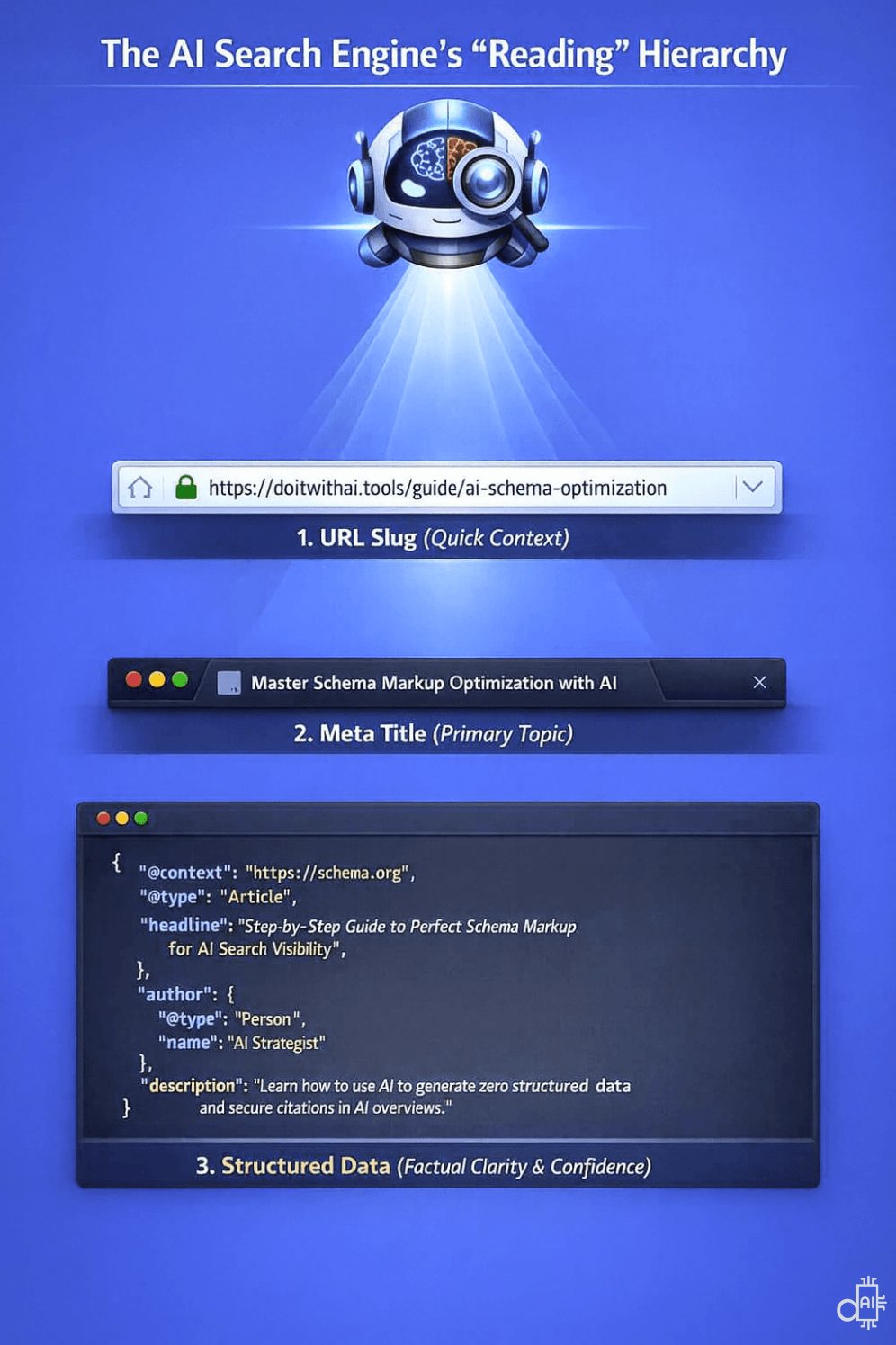
Discover how AI prioritizes URL slugs, meta titles, and structured data for accurate answers, helping you optimize schema markup with free AI tools for better rankings.
What Is Schema Markup? A Clear Definition for SEO and AI Search Engines
Getting the Basics Right First
Before understanding the importance of schema markup, it’s important to clearly understand what schema markup actually is.
This basic understanding makes it easier to apply optimization techniques correctly in the sections that follow.
The Core Definition
Schema markup is a form of structured data that helps search engines and AI systems understand your content at a deeper level.
Instead of only reading text, these systems use schema markup to understand what the content represents. This could be an article, a product, a person, a video, or a frequently asked question.
Technical Side vs. Real Value
From a technical point of view, schema markup is usually implemented using JSON-LD, which is added to a page’s HTML.
However, from an SEO and AI perspective, the real value of schema markup is not the code.
Just as you write easily readable content for human visitors, structured data serves the same purpose for AI systems. It provides an organized description of your page, allowing them to interpret it without confusion.
How Schema Evolved
A few years ago, schema markup was mainly used for traditional SEO purposes. Its role was to help Google place content correctly inside rich results.
For example, schema helped search engines decide whether a page should appear as a rich snippet, an image result, a video result, a review card, or a knowledge panel entry.
At that time, the goal was mostly to have a better presentation inside search engine result pages.
The AI Era Shift
The role of schema markup has expanded significantly with the rise of AI-driven search engines.
Today, schema markup helps AI systems understand context, identify entities, and connect information across multiple sources.
This allows AI search engines to summarize content accurately and, in many cases, cite your content as a trusted source in AI-generated answers.
Key Benefits of Proper Implementation
When schema markup is implemented correctly, it helps search engines and AI systems:
- Understand the context of your content
- Identify key entities and relationships
- Present your content in enhanced formats, such as rich results
Even a minimal but accurate implementation of structured data can make a noticeable difference.
Bridging Human and Machine Understanding
As AI search engines continue to evolve, schema markup acts as a bridge between human-written content and machine understanding.
It increases the chances that your content is selected, reused, or referenced in AI-driven search experiences.
This foundation makes it easier to understand why schema markup is no longer optional. It directly impacts visibility in modern AI search engines.
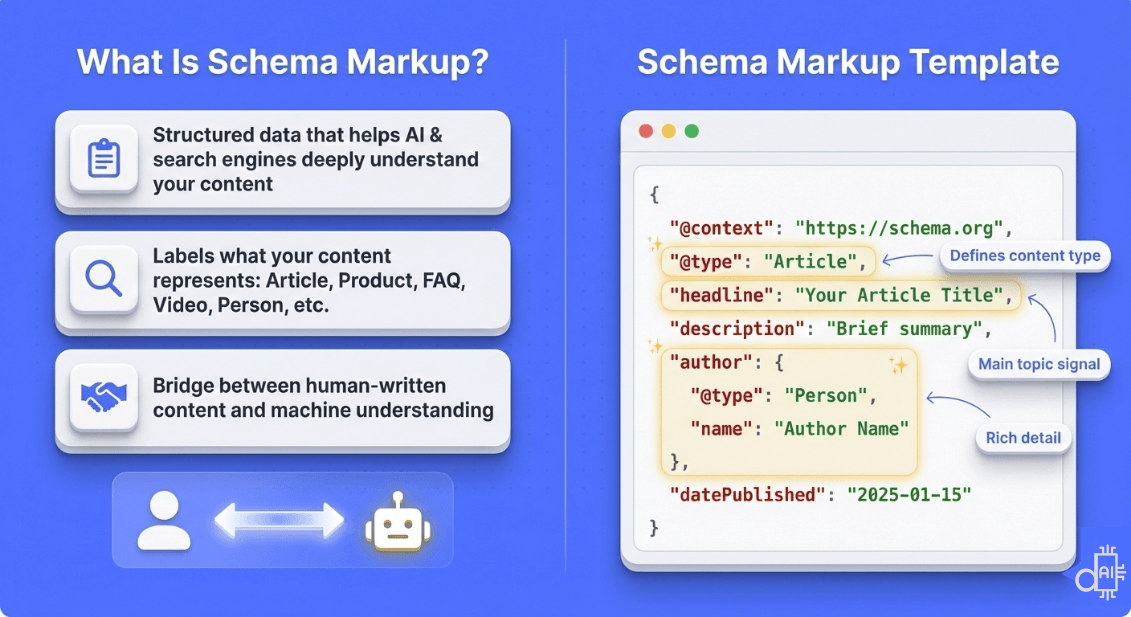
You can think of schema markup as the universal language that connects your creative writing with the technical needs of an AI crawler.
Why Schema Markup Matters More Than Ever for AI Search Engines
Here’s the truth about schema markup in today’s search world.
It goes far beyond old-school rich snippets.
As AI takes over more queries, structured data is your direct line to getting featured — and here’s why it matters so much.
- Structured data labels page information in a machine-readable format. It must match visible content and does not eliminate interpretation errors.
- Search giants openly back this approach.
Fabrice Canel, Microsoft Bing’s Principal Product Manager, put it clearly in 2025: “Schema markup helps Microsoft’s LLMs understand content better.” He highlighted how it prepares sites for AI-driven results. Google does the same — feeding schema into their Knowledge Graph, the backbone of reliable AI summaries. - Supported structured data can make eligible pages available for certain rich results. It does not guarantee display, clicks, or AI visibility.
- Rich-result eligibility depends on the supported feature and its policies. Do not treat schema as a guaranteed ranking or click-through improvement.
- Structured data describes page content. Validating markup does not fix unrelated crawling, indexing, or internal linking problems.
- Google's AI features do not require special schema. Use structured data when it accurately represents the page and supports a relevant feature.
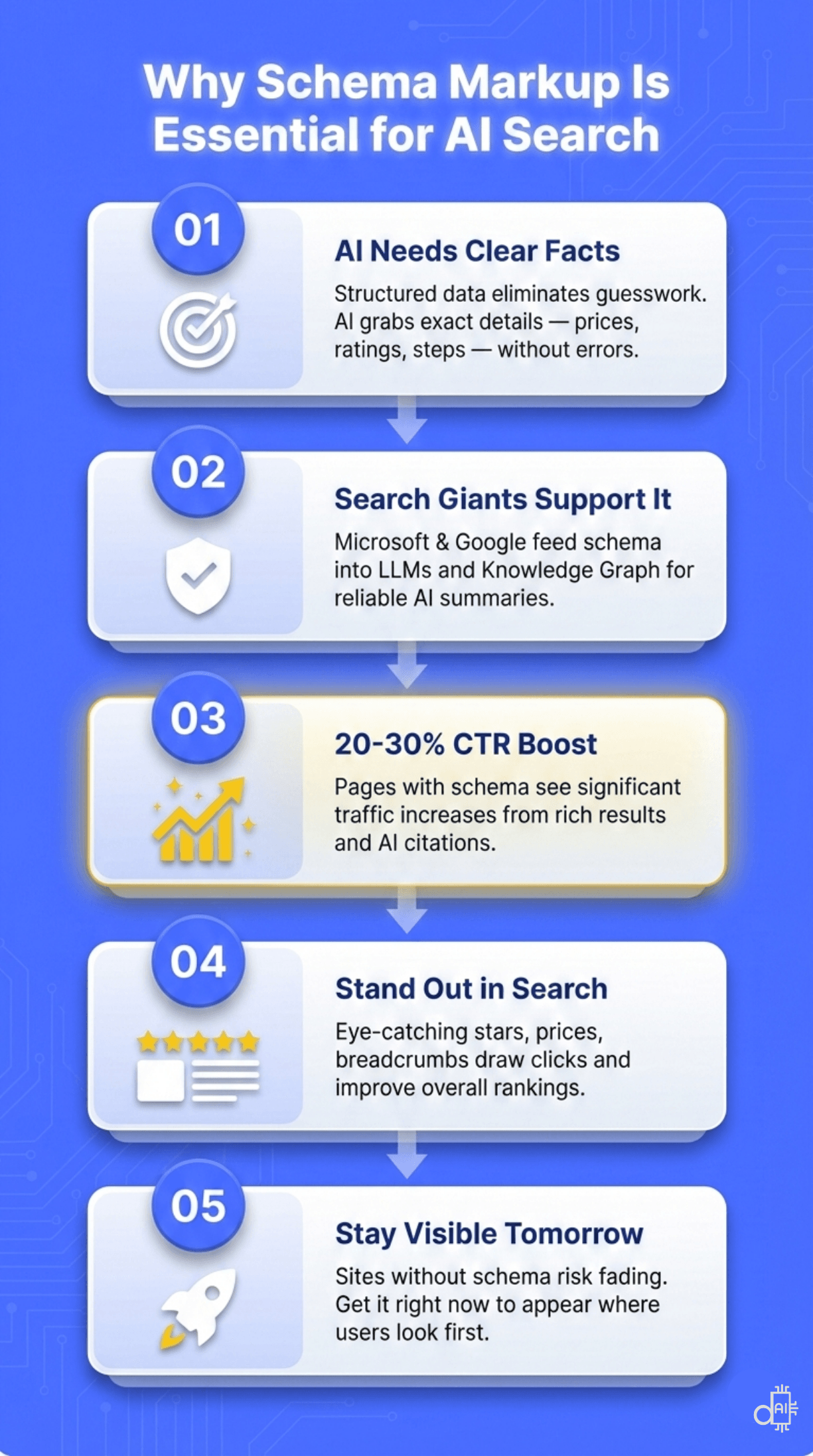
You can provide AI with the clear facts it needs by using structured data to eliminate guesswork around your prices, ratings, and steps.
Choose relevant schema types and check current search feature support. Markup is not required for Google AI features.
Schema Markup Best Practices for AI Search Engines in 2025
Getting schema markup right can make a real difference. It helps search engines understand your pages better. And in today’s world, it boosts your chances of showing up in rich results or AI answers.
Follow these proven practices to build clean, effective, structured data.
They come straight from Google guidelines, Schema.org, and what works best for AI search visibility.
- Stick with JSON-LD format for most cases. Google strongly prefers it because it’s clean, easy to add in the head section, and keeps your markup separate from the visible HTML. This reduces errors and makes updates simple.
- Pick the exact schema type that fits your content. Use Article for blog posts, Product for ecommerce items, FAQ for question lists, or LocalBusiness for physical locations. Matching the type precisely helps AI engines and search crawlers get the full picture without confusion.
- Add relevant keywords naturally in key fields like name, headline, and description. These fields send strong signals about what your page is really about. Just like in regular on-page content, the right terms help AI engines match your page to searches more accurately—and now you can easily do keyword research with AI to find the best ones.
- Only mark up what users can actually see on the page. Your structured data must mirror the visible content exactly. This builds trust and avoids issues — Google checks for this closely.
- Follow the selected type's required and recommended properties. Include ratings, dates, and images only when truthful and appropriate.
- Keep everything accurate and fresh. Update prices, event dates, or reviews right away. Outdated info can drop your eligibility for features or hurt user trust.
- Validate your code every time before going live. Run it through Google’s Rich Results Test and the Schema Markup Validator. Catch small fixes early — it saves headaches later.
- Focus first on pages that drive the most SEO value. Prioritize your homepage with Organization schema, key products, or high-traffic articles. Quick wins here build momentum.
- Leverage AI tools like ChatGPT or Grok to generate and refine your schema markup. Feed in your page details with clear prompts, and let the tool create clean JSON-LD code fast. It’s a huge time-saver for crafting full snippets, especially when scaling across many pages.
- Connect related entities using supported properties. Include reviews, ratings, or steps only when accurate and present on the page.
These steps aren’t complicated, but they pay off big. Follow them, and your structured data becomes a strong SEO asset for both traditional search and the growing world of AI engines.
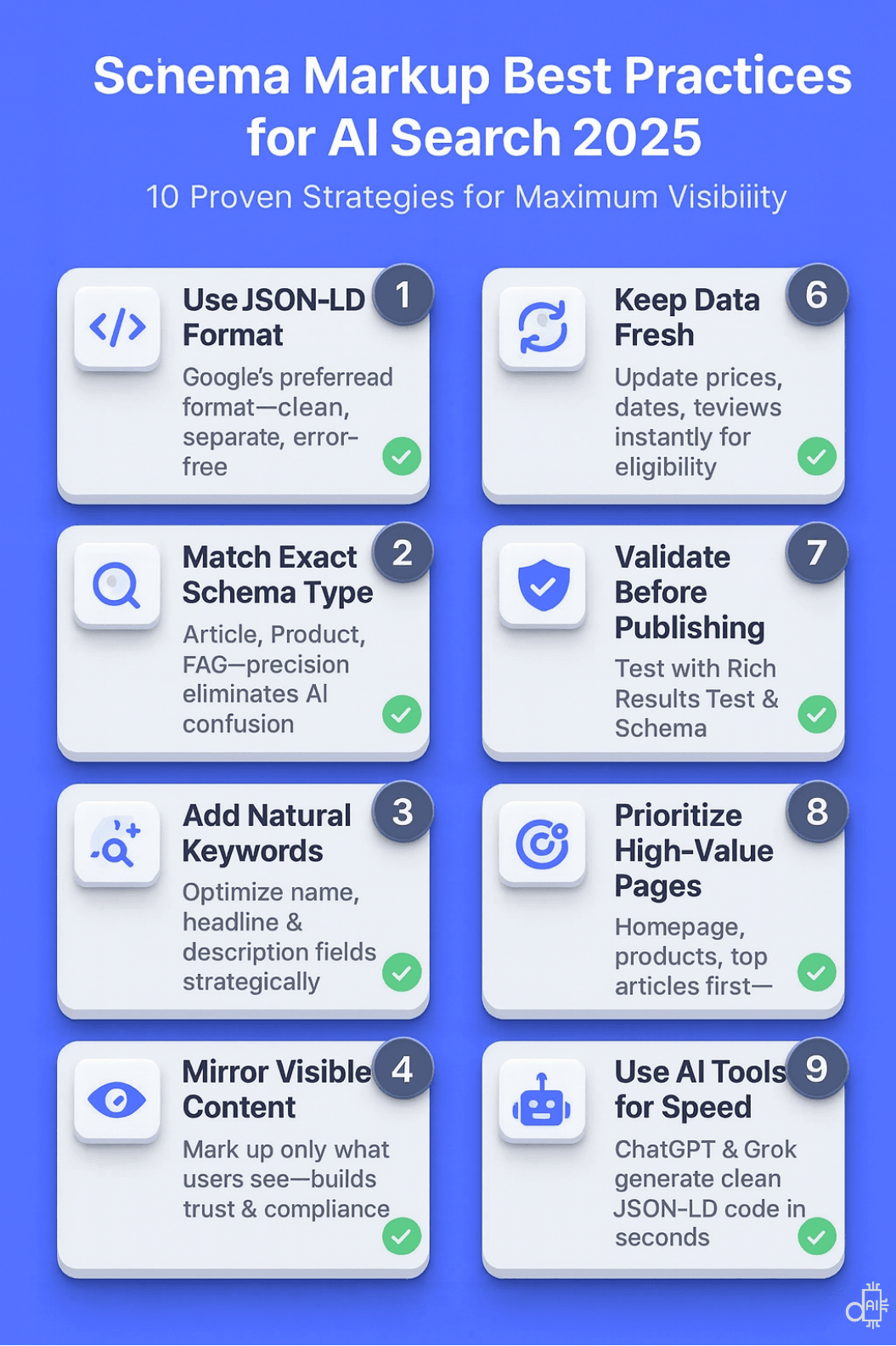
Validating your structured data before you hit publish is the final essential step to securing accurate AI citations and higher rankings.
Common Schema Markup Mistakes to Avoid in 2025 for Better AI Visibility
Even the best schema markup setup can go wrong with one small slip.
These errors quietly block rich snippets, lower click rates, and keep your content out of AI answers.
Many sites face them every day — from syntax slips to bigger trust issues.
Here are the top mistakes SEO pros see most often. Spot them early, and you keep your structured data working for you in traditional search and AI engines.
- Structured data can support eligible search features. Omitting it does not automatically prevent AI citations or make a page untrustworthy.
- Picking the wrong schema type.
This happens a lot. People use Recipe markup on a page with just cooking tips, or Product on a category list instead of single items. Search engines get confused, and your rich results vanish. Always match the type exactly to your content. - Invalid JSON-LD can prevent processing. Check syntax and feature requirements rather than assuming one error type causes most failures.
- Missing required fields or properties.
Every schema type needs certain details — like name, price, or date. Skip them, and you miss out on features. Tools like Google’s Rich Results Test flag these fast. - Marking up hidden or invisible content.
Never add schema for text users can’t see, like in tabs or behind logins. This breaks guidelines and can lead to penalties or lost trust. - Outdated or inaccurate data.
Old prices, wrong dates, or changed availability hurt more than help. Keep everything fresh, especially for products or events. - Overloading pages with too much schema.
Adding unrelated types or duplicates sends mixed signals. It dilutes focus and risks looking spammy to search engines. - Spammy tactics like fake reviews or keyword stuffing.
Inflating ratings or hiding keywords in fields triggers manual actions. Google spots this and removes rich results — or worse. - Not testing or validating before launch.
Many skip checks and only spot problems later in Search Console. Always run your code through validators first. - Conflicting or competing markup on one page.
Multiple scripts claiming different things about the same content confuse crawlers. Pick one clear approach. - Forgetting to update when content changes.
A page edit without a schema tweak leaves old info behind. This mismatch drops eligibility over time.
Validation helps identify technical issues. It does not establish click-through improvements or predict AI citations.
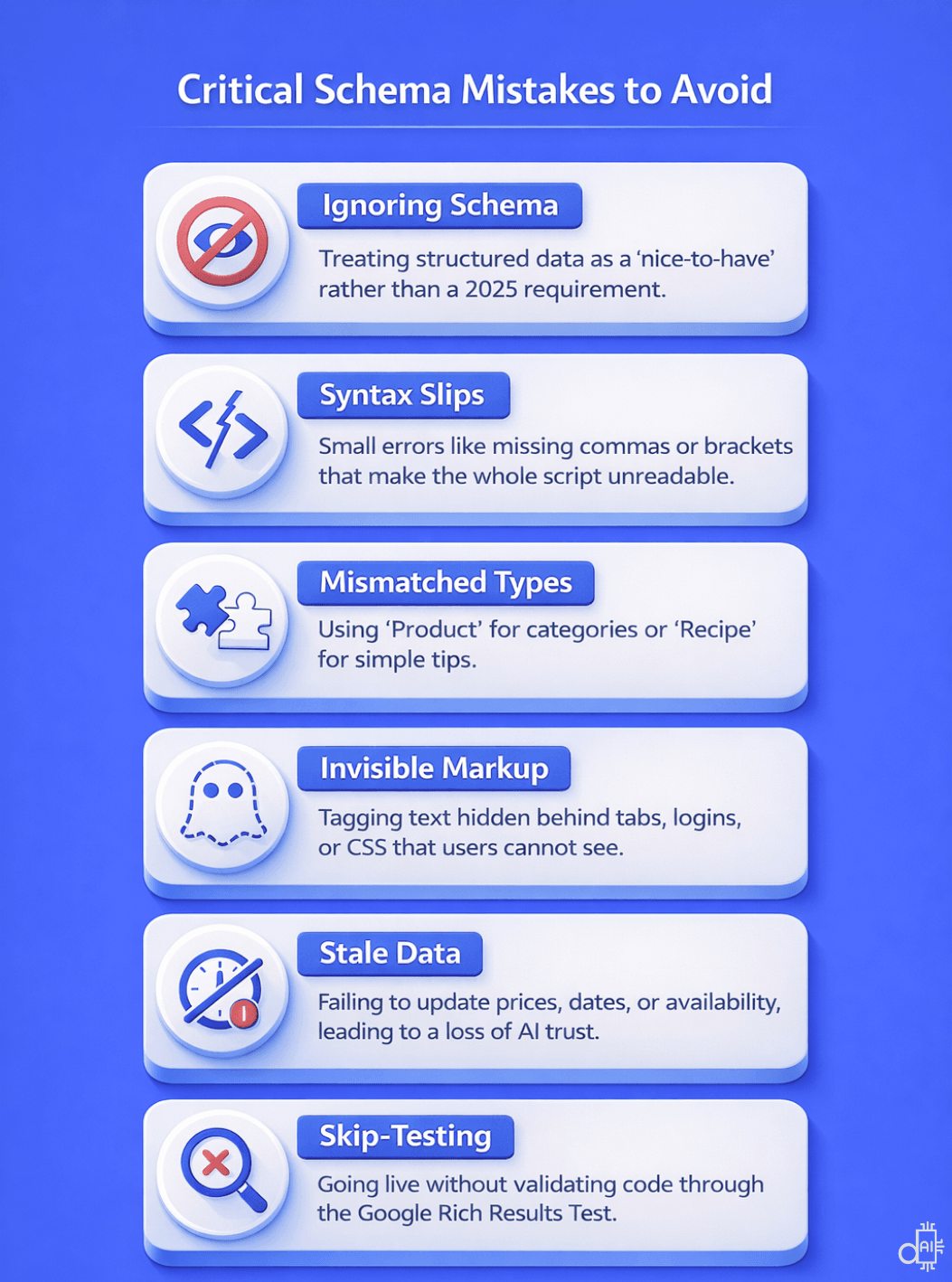
Avoiding simple syntax slips like missing commas or brackets is the first step toward making your structured data readable for AI engines.
Top Schema Types That Drive AI Visibility and Rich Results in 2025
Schema.org defines many types, while Google supports a smaller set of search features. Check current documentation for your chosen type.
Prioritize relevant, accurate markup and validation. Do not promise faster clicks, AI citations, or inclusion in AI Overviews.
- Article markup can describe a headline, author, dates, and images. Use accurate properties that match the article.
- FAQPage describes visible questions and answers. Google no longer shows FAQ rich results; this markup does not guarantee AI citation.
- HowTo can describe step-by-step instructions. Google no longer supports HowTo rich results, and other platforms may use markup differently.
- Product. Key for ecommerce pages. Add price, availability, reviews, and brand. AI shopping tools and overviews pull this data to recommend items fast.
- Recipe markup can describe ingredients, instructions, timing, and nutrition. Follow current eligibility requirements without promising search display.
- Organization or LocalBusiness. Set this on your homepage or contact page. Share name, logo, address, and social links. It builds brand trust and feeds knowledge panels that AI relies on.
- VideoObject. Mark up videos with title, description, thumbnail, and upload date. From scripting to final upload, video creation with AI speeds things up and helps content shine in carousels and AI results.
- BreadcrumbList. Simple but useful. Shows page hierarchy. Improves navigation signals for both users and AI understanding.
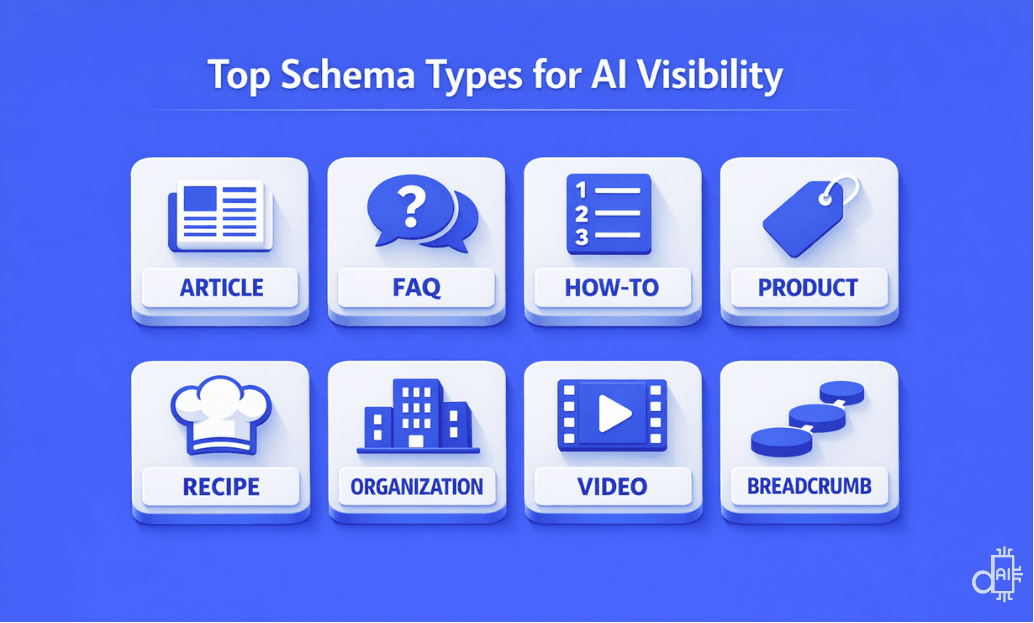
Moving toward a structured approach with these specific types ensures your guides and news posts are ready to be quoted in AI overviews.
Mastering Schema Title Optimization: Best Practices for AI Visibility
Here’s where many miss big chances.
The schema title — called “headline” in Article or “name” in Product/Recipe — works differently from your page’s meta title tag.
The meta title (in the <title> tag) shows as the blue link in search results. It’s written for humans and classic SEO — short, keyword-rich, and clickable.
But the schema title? Humans never see it directly. It’s pure machine food — especially for AI search engines.
In today’s AI era, visibility often means getting cited in overviews or answers. User engagement now depends on AI decisions. The AI system picks which sources to summarize or cite.
A strong schema title raises your odds. It’s one of the first fields machines read. If it gives a clear, descriptive context, AI understands your content better and pulls it in more often.
Real examples show this.
Use an accurate headline or name where the chosen schema type supports it. No universal schema-title citation benefit is documented.
These AI summarization tools match content to real user intent, so titles that capture what searchers actually want stand out more in overviews and answers.
Make yours natural, benefit-focused, and detailed — like “Easy 30-Minute Homemade Lasagna Recipe for Beginners” instead of just “Lasagna.”
Best practices for writing effective schema titles:
- schema titles can be slightly lengthier than your meta title to add more value, but avoid going over 110 to keep it focused.
- Include main keywords naturally for better schema title optimization. Free AI keyword research tools make finding the right ones quick and simple.
- Focus on user value or questions to match how AI processes queries.
- Rephrase a little from the meta title — make it more descriptive for machines, like adding benefits or specifics.
- Match the visible page heading closely, but tweak for the structured data title AI needs.
This small field packs huge power. Nail schema title optimization, and your content stands out when AI chooses sources.
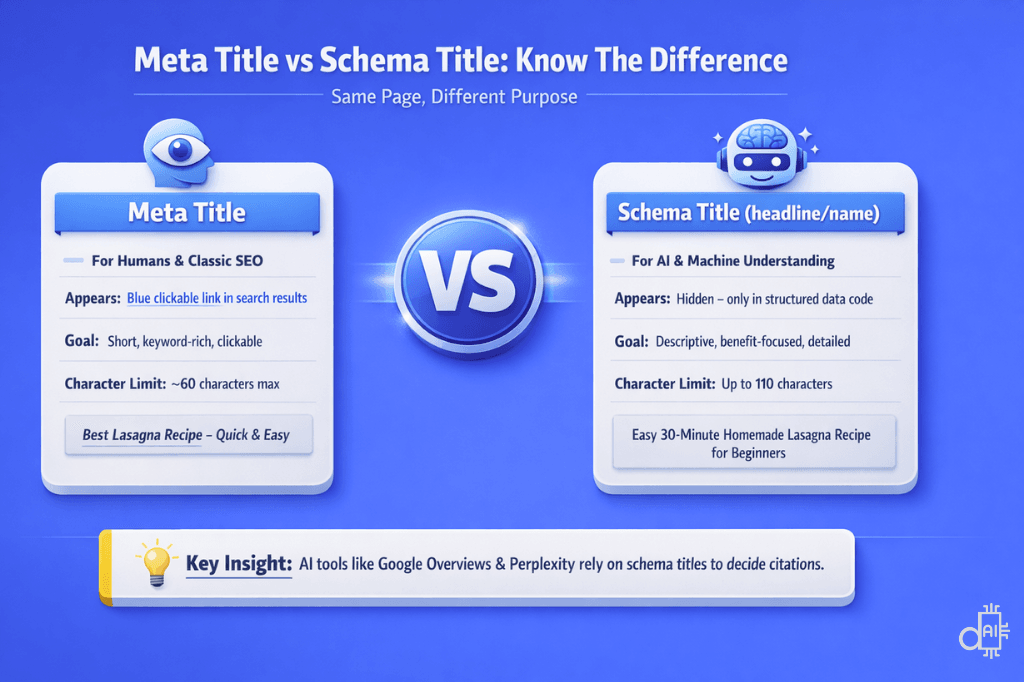
Mastering schema title optimization ensures your content is optimized for machine understanding without cluttering the experience for human readers.
Benefits of Using AI to Create and Optimize Schema Markup
Let’s pause here and talk about why this matters.
Switching to AI tools for schema markup isn’t just a nice trick. It brings clear wins that save time and lift your site’s performance.
Here are the main benefits you get right away.
- AI speeds things up a lot.
Writing JSON-LD by hand or using basic generators takes time. AI like ChatGPT or Grok creates full code in minutes. You share page details, and it builds clean markup fast. This frees you for bigger SEO tasks. - AI removes the schema headache when publishing new articles.
Every time you create fresh content, filling all those schema fields feels like a chore. Just feed your article text or key details to AI. It handles the heavy lifting — populating every field accurately. You save hours and stay focused on writing great new posts instead of markup. - Bulletproof code with zero syntax errors
Humans often slip on syntax — a missing comma or wrong bracket kills the whole script. AI doesn’t. While it might occasionally mess up creative content, it has near-zero chance of error when coding structured data. It follows Schema.org rules exactly and delivers detailed, syntax-free JSON-LD markup you can trust right away. - AI can draft JSON-LD from supplied facts. Review every property and never invent ratings, reviews, prices, or required information.
- Stronger visibility in AI search engines. A detailed schema helps AI systems understand your content better. They cite it more in overviews and answers. As AI grows, this edge keeps your site ahead.
- Measure any search changes after implementation. Do not apply generalized CTR percentages to your own pages.
- Perfect for scaling big site.
Big sites add content often. With AI, you get fresh, accurate markup every time — no extra manual effort needed. This frees you from the constant schema tasks. You can focus fully on growing and scaling your website, adding more pages and traffic without getting stuck on technical details.
These advantages make AI the smart choice for schema markup today. You work faster, get stronger results, and prepare for future search changes.
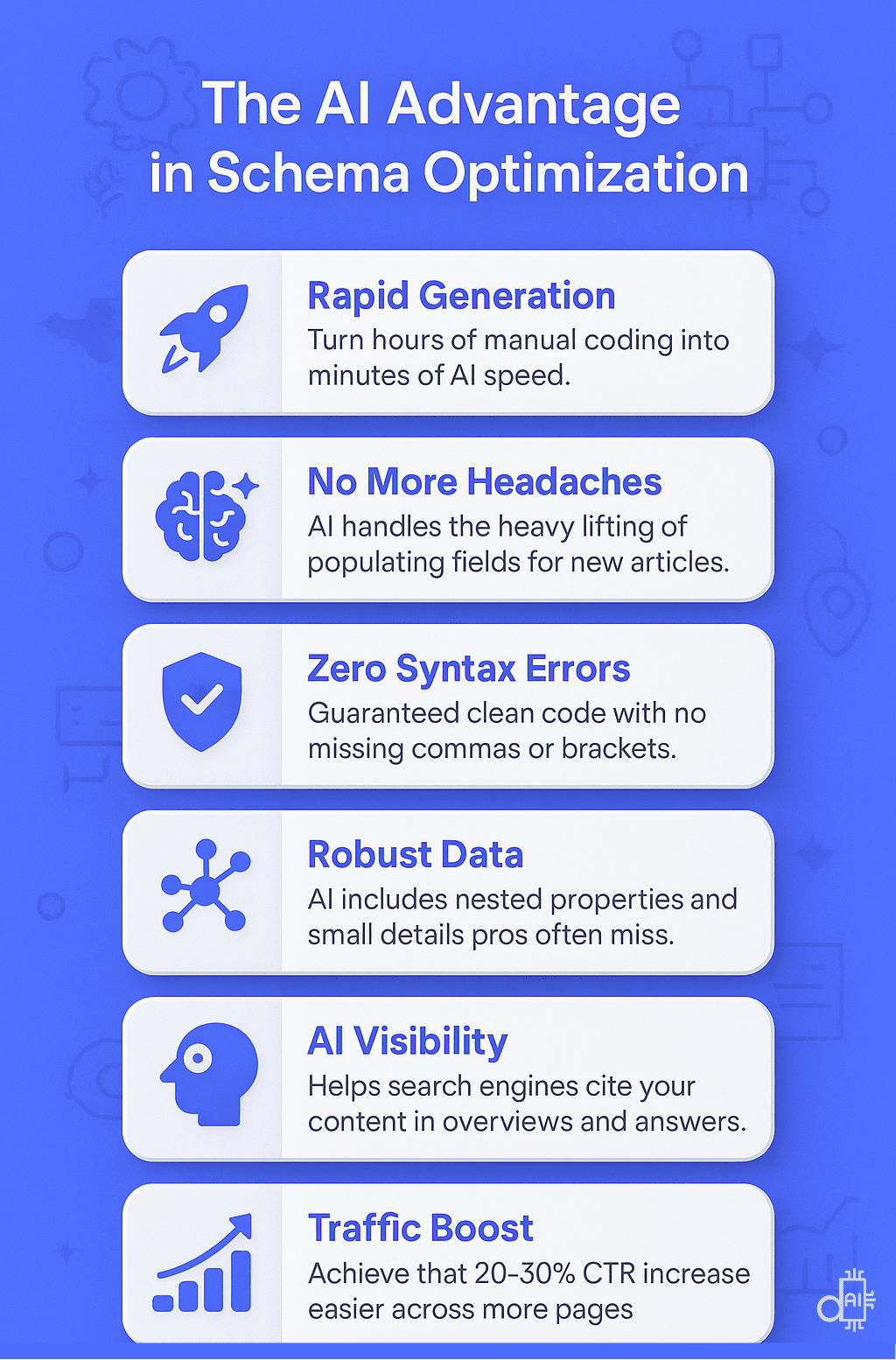
Achieving a 20-30% traffic boost becomes much easier when you use AI to scale your schema across more pages consistently.
How to Use ChatGPT to Create and Optimize Schema Markup
Now, let’s get hands-on. We’ll focus on ChatGPT because it’s free, reliable, and perfect for this job. You can do the same with Grok or Claude — the idea stays the same.
The easiest way is to use one strong, reusable prompt template. It works for any page: blog articles, product pages, HowTo guides, recipes, FAQs, author bios, local business pages — everything.
You only need to paste your page details at the top. ChatGPT will read them, figure out the best schema type (or types), and build complete, detailed JSON-LD markup. It fills every possible required and recommended field without you telling it each one.
Here’s how to use it:
- Open an available AI assistant and provide the page's verified facts. Review its output before adding it to your website.
- Copy the full prompt template below.
- Replace the part between the brackets [⋯] with your actual page information.
- Send it.
- ChatGPT will return clean, valid JSON-LD code.
- Copy the code, test it in Google’s Rich Results Test, and add it to your page.
Your Universal ChatGPT Prompt to Create Rich JSON-LD Schema Markup
Copy everything from here ↓
You are an expert in Schema.org structured data and JSON-LD markup. Your goal is to create the most complete, accurate, and rich schema markup possible for the webpage I describe below.
First, carefully analyze the content I provide and determine the most appropriate primary schema type(s). Common types include:
- Article (or NewsArticle/BlogPosting)
- Product
- Recipe
- HowTo
- FAQPage
- LocalBusiness
- Organization
- Person
- VideoObject
- Course
- Event
- Book
- Or any other fitting type from Schema.org
You can combine multiple types if they make sense (nest them correctly)
Use ONLY valid Schema.org vocabulary. Include ALL required properties and as many recommended properties as possible based on the content. Add relevant optional properties that add value (reviews, ratings, offers, steps, ingredients, author details, images, etc.).
Make the "headline" or "name" field descriptive and natural (50-110 characters), slightly longer and more detailed than a typical meta title, but still focused.
Output ONLY the final JSON-LD script inside a single <script type="application/ld+json"> tag. Do not explain, do not add extra text, do not wrap in markdown fences unless I ask later.
Here is the page information:
Title of the page: [Insert the visible H1 or page title here]
Meta title (if different): [Insert meta title or leave blank]
Meta description: [Insert meta description or leave blank]
Full URL of the page: [Insert full URL]
Main content summary or full text: [Paste the main article text, product description, steps, ingredients, FAQs, etc. here. The more detail you give, the better the markup]
Author name: [Insert author name]
Author bio or about (optional): [Insert short bio]
Publish date: [YYYY-MM-DD]
Last updated date (if different): [YYYY-MM-DD]
Main image URL: [Insert primary image URL]
Additional image URLs (optional): [List other relevant image URLs]
For products: price, currency, availability, SKU, brand, reviews/ratings if any
For recipes: cook time, prep time, ingredients list, nutrition info if available
For HowTo: full steps, tools/supplies
For FAQ: list of questions and answers
Any other relevant details (ratings, offers, video URL, location, etc.): [Add anything else here]
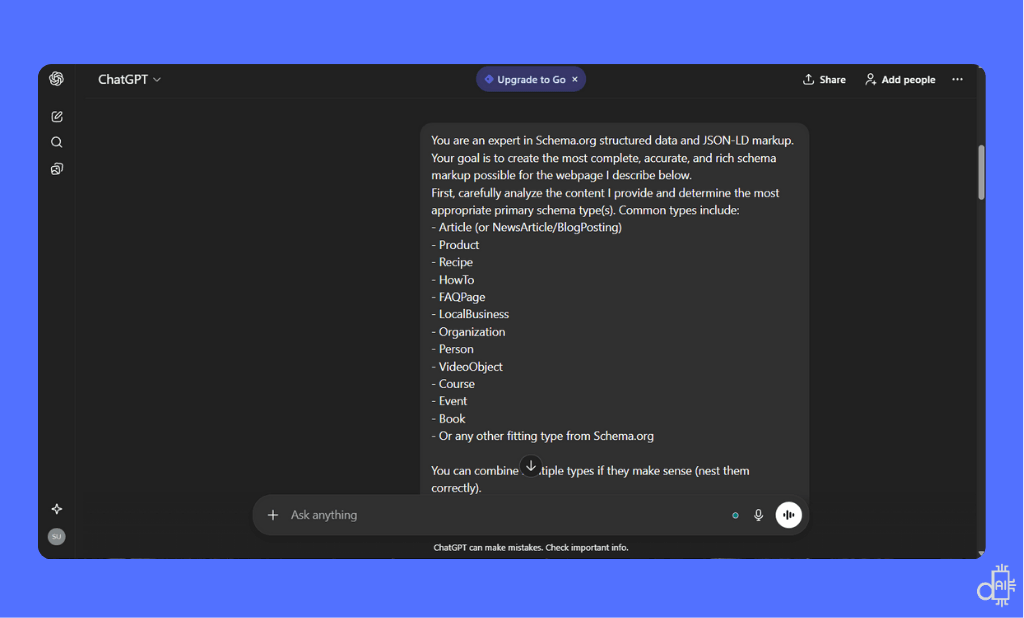
You can use this master prompt in ChatGPT to instantly transform your page details into rich, valid JSON-LD code.
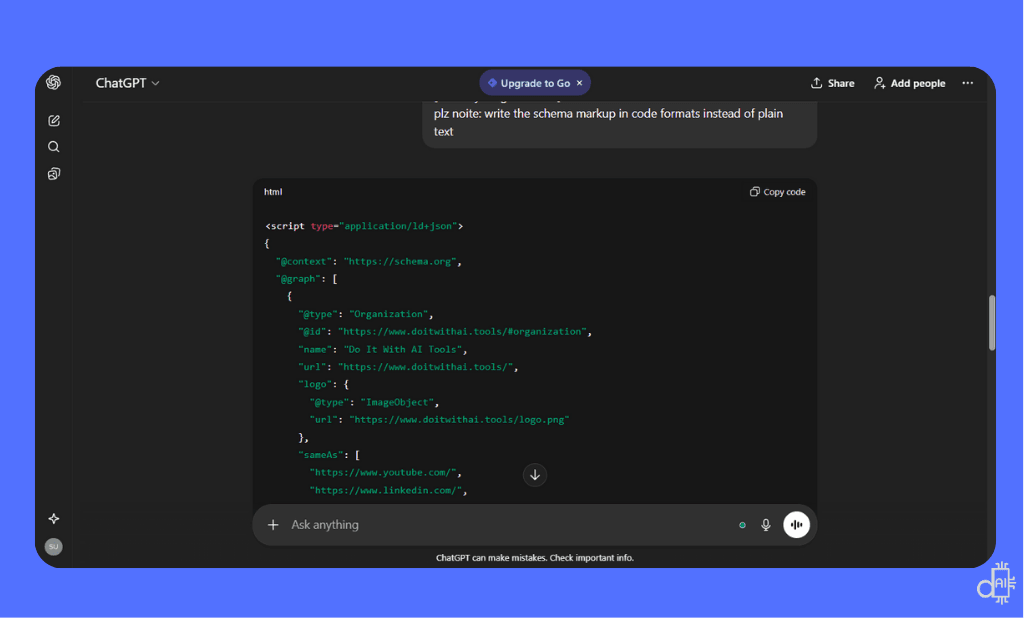
Transitioning from a prompt to a technical code output is a seamless process that removes the risk of manual coding errors.
Optimize Your Existing Schema Markup with ChatGPT
You already have a schema on some pages. Great start. But many times, it’s missing fields, outdated, or not as rich as it could be.
That hurts rich results and AI visibility.
Good news: you can fix and upgrade it fast with AI.
Use this dedicated ChatGPT prompt made just for optimizing existing schema markup.
It tells ChatGPT to:
- Read your current JSON-LD code
- Spot errors or missing parts
- Add all possible required and recommended fields
- Make titles more descriptive
- Keep everything valid and Schema.org compliant
How to Use This Optimization Prompt
- Open an available assistant and supply the markup with the relevant requirements.
- Copy the full prompt below.
- Paste your current JSON-LD code where it says [PASTE YOUR EXISTING JSON-LD HERE].
- Add any extra page details if you have them (updated dates, new images, reviews, etc.).
- Send it.
- You’ll get an improved, richer version ready to replace the old one.
- Always test the new code in Google’s Rich Results Test before going live.
ChatGPT Prompt Template for Schema Markup Optimization
Copy everything from here ↓
You are an expert Schema.org auditor and optimizer. Your job is to take existing JSON-LD schema markup, fix any issues, and make it as complete and rich as possible.
First, carefully analyze the provided JSON-LD code.
Then:
- Fix any syntax errors (commas, brackets, quotes, etc.)
- Identify the main schema type(s) used and confirm they are correct.
- Add ALL missing required properties.
- Add as many relevant recommended and optional properties as possible (reviews, ratings, offers, author details, images, speakable, nested items, etc.).
- Improve the "headline" or "name" field: make it natural, descriptive, benefit-focused, 50-110 characters, slightly longer and more detailed than a typical meta title.
- Update dates, prices, or any outdated info if mentioned.
- Keep the structure clean and valid.
- Combine multiple schemas correctly if needed.
- Follow the latest Schema.org guidelines.
Extra page details (use these to enrich the markup):
Current publish date: [Add if changed]
Last update date: [Add if different]
New images: [List URLs]
Reviews/ratings: [Add any new ones]
Other updates: [Anything else like price changes, new offers, etc.]
Output ONLY the optimized JSON-LD script inside a single <script type="application/ld+json"> tag. No explanations, no extra text, no markdown fences.
Here is the existing schema markup to optimize:
[PASTE YOUR EXISTING JSON-LD CODE HERE]
Generate the improved version now.
That’s all you need.
This prompt turns basic or old schema into something strong and AI-ready in minutes.
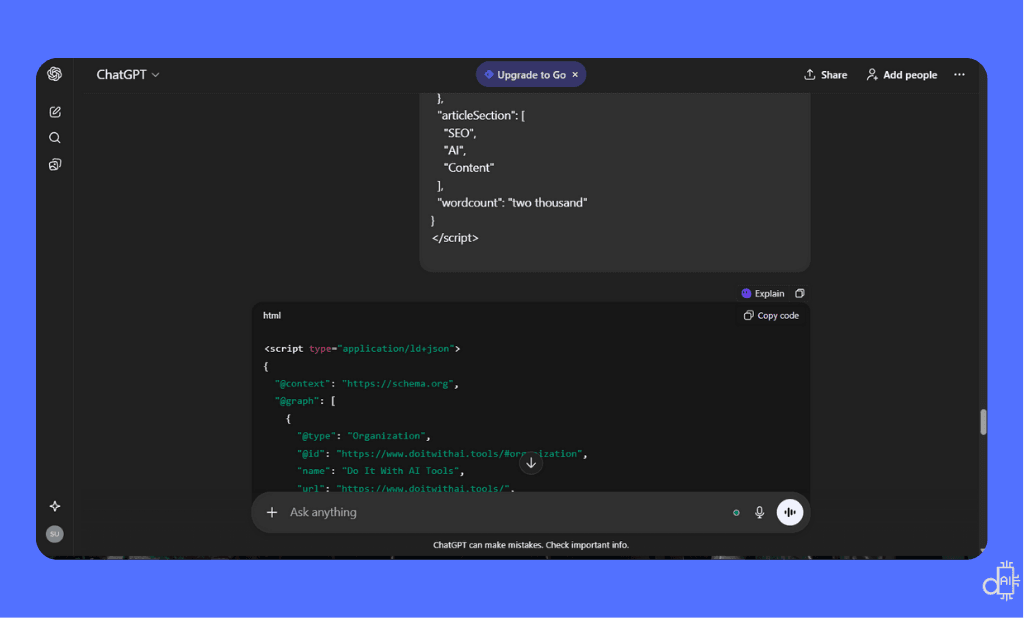
You can use this specialized optimization prompt to turn basic schema into a high-performance asset for your technical SEO.
Best AI Tools to Create and Validate Schema Markup for AI Search Engines
You’ve created your schema markup — now make sure it works.
Syntax errors can invalidate markup. Validation cannot guarantee rich results or determine whether an AI platform will cite a page.
Even code from AI tools needs a quick check. Always test before adding it to your site.
Here are the best options. Start with AI for flexibility, then use official tools for confidence.
1. ChatGPT (or Other AI Models like Grok, Gemini, Claude ) – Best for Flexibility and Quick Tweaks
ChatGPT tops the list for validation. It’s versatile, speaks your language, and lets you ask questions like “Is this valid?” or “Fix this error.”
Paste your JSON-LD code. Ask it to check syntax, spot missing fields, or improve details. You can tweak on the spot — add properties, change titles, or combine schemas.
Grok, Gemini, or Claude work the same way. Pick what feels best to you. AI makes validation interactive and fast.
Choosing the right platform from these four major AI tools allows you to generate professional schema markup for any content type.
2. Google Rich Results Test – Must-Use for Real Confidence
This is essential. Your schema work isn’t complete without it.
Google's Rich Results Test checks supported feature requirements. Schema.org validity alone does not establish Google rich-result eligibility.
It catches issues AI might miss, like wrong formatting. Even one misplaced quote can break everything. Run this every time, even after AI generation.
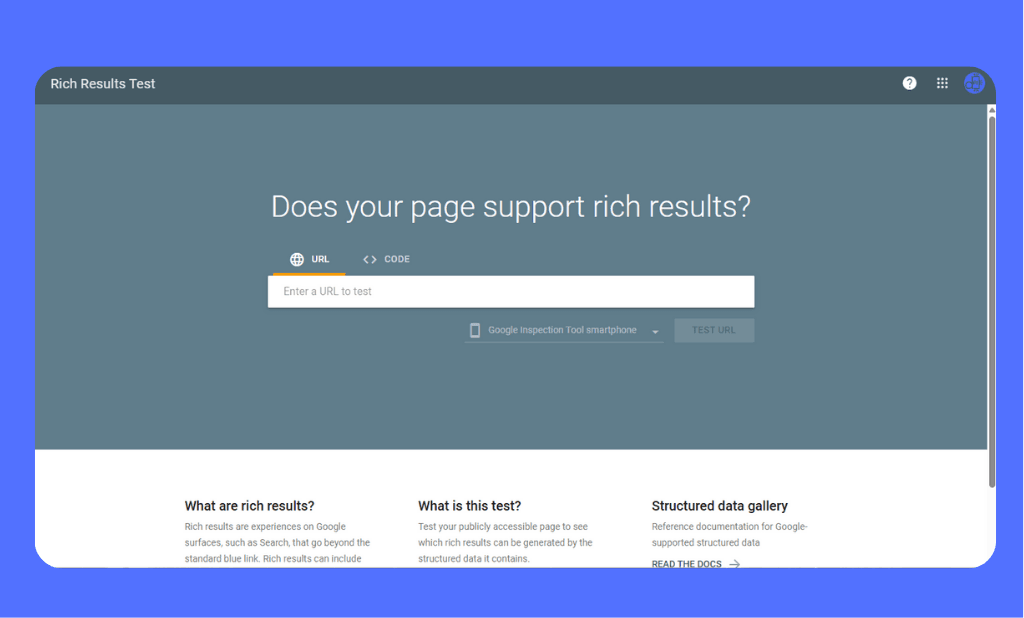
Running your code through the Google Rich Results Test is the final essential step to guarantee your schema markup works perfectly.
3. Schema Markup Validator (schema.org) – See the Full Picture
This official tool from Schema.org works great alongside Google’s.
Google focuses on the rich results they support. Schema.org shows everything — every field and property you added.
It gives a complete view of your structured data. Perfect for detailed schemas with many nested items.
Enter code or URL. It highlights errors and warnings clearly.
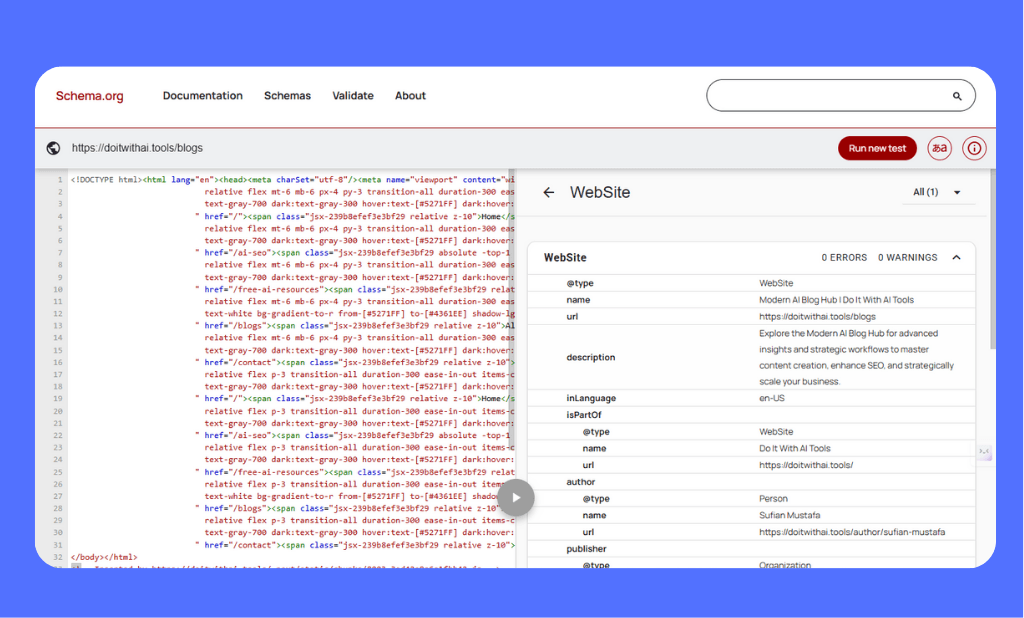
Using the Schema.org Validator allows you to see the full picture of your data, including every nested field and property that search engines process.
4. TechnicalSEO.com Schema Markup Generator (with built-in validation).
This goes beyond a simple generator. You pick the schema type from a clear dropdown, fill in the fields step by step, and it creates clean, ready-to-use JSON-LD code instantly.
This also includes direct buttons to validate right in Google’s Rich Results Test. It’s super handy for quick checks and tweaks while you build or update pages.
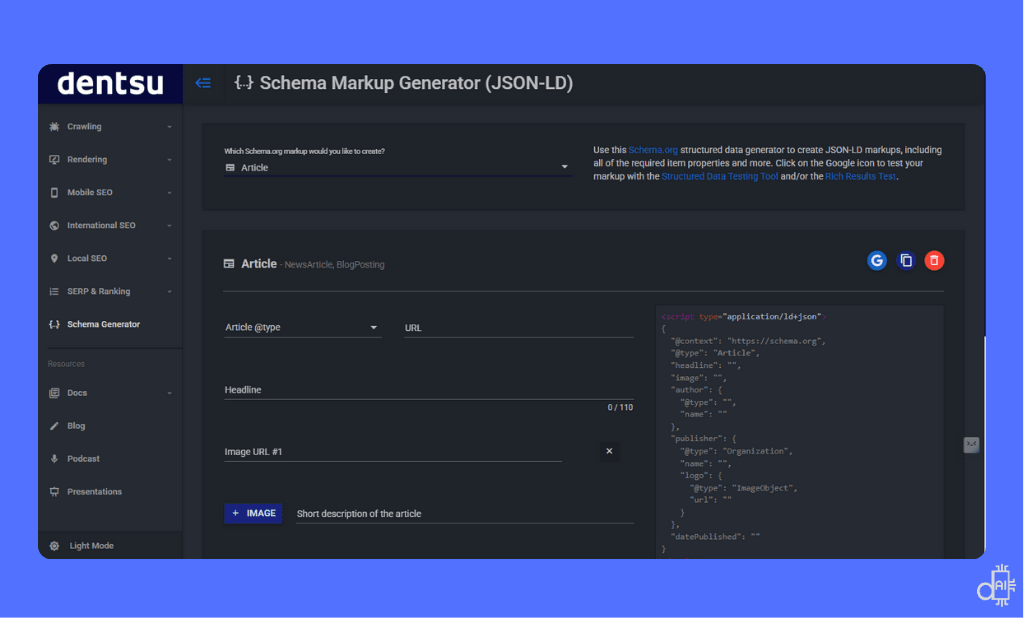
This professional generator removes the guesswork from structured data, allowing you to create error-free markup for everything from products to FAQs.
5. Google Structured Data Markup Helper – For Visual Tagging
This older Google tool still helps beginners.
Paste a URL or HTML. It loads your page and lets you tag elements visually — highlight text for name, image, date, etc.
It then creates markup (often microdata). Good for learning, but switch to JSON-LD for most sites.
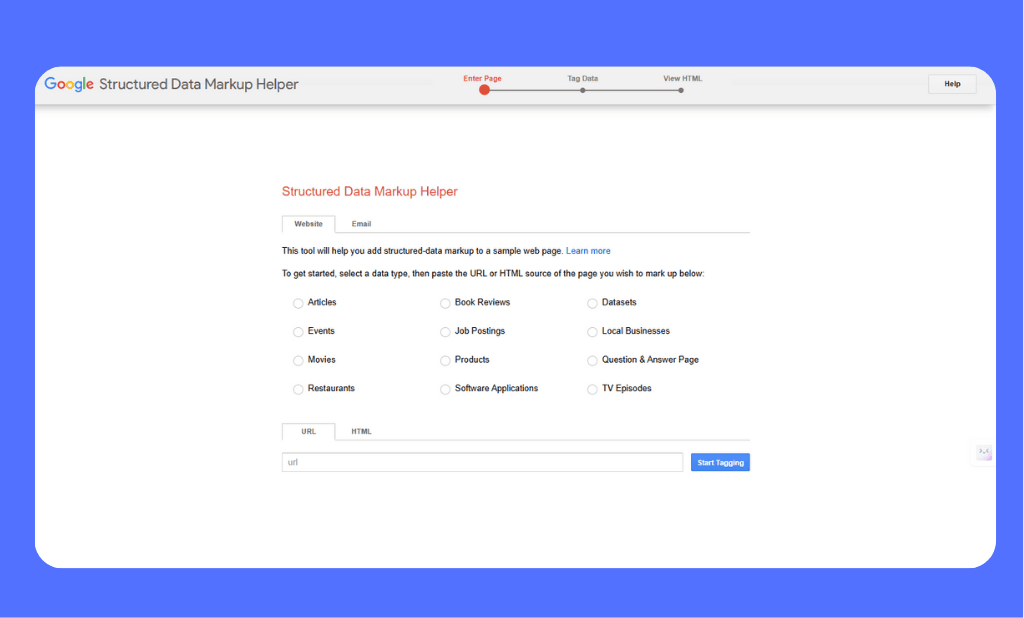
While this classic tool often defaults to microdata, you can easily switch your output to JSON-LD to follow Google’s latest recommendations.
5. AdAmigo AI Crawler Accessibility Checker – Ensure Your Site Is Open to AI Bots
One more tool worth using at least once: AdAmigo's Free AI Search Visibility Checker.
This technical audit checks your site's robots.txt file. It detects if GPTBot (OpenAI/ChatGPT), ClaudeBot, or other major AI crawlers are blocked.
It also spots other issues — like headers, JavaScript-only content, or rendering problems — that could stop AI engines from accessing your pages fully.
Check crawler access with appropriate technical tools. One checker cannot establish accessibility to every AI platform or predict citations.
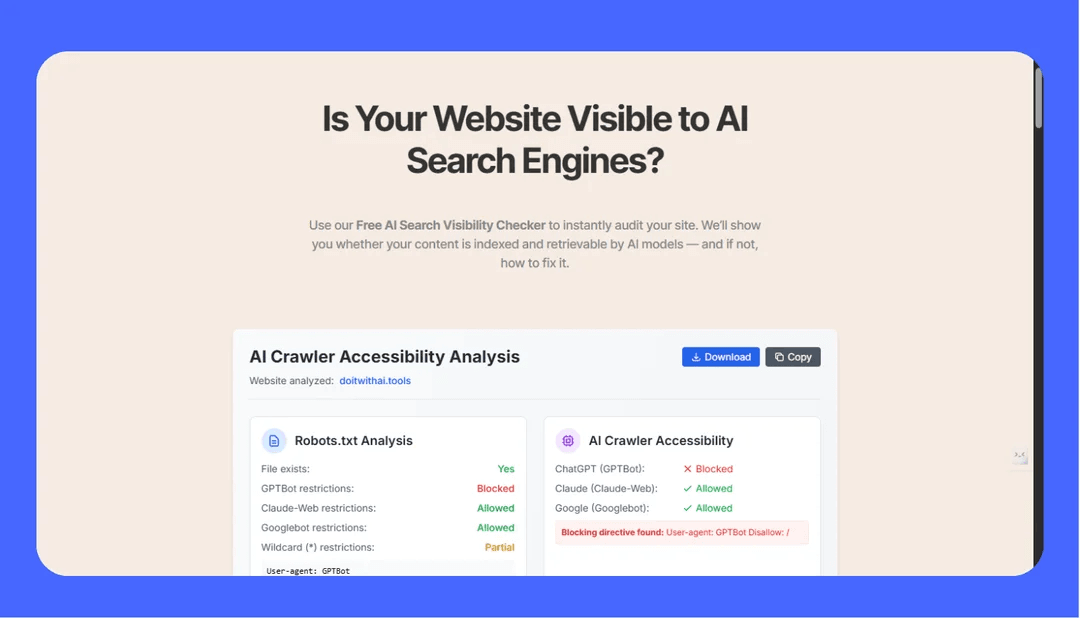
Even the most perfect structured data won't help your visibility if your site accessibility shows a red 'Blocked' status for key crawlers.
6. AI-Powered Schema Generators (Bonus for Creation + Validation)
Some of the new AI-powered schema markup tools blend generation and validation, offering a more robust solution with advanced features.
Examples include Alli AI, SchemaWriter.ai, Addlly.ai’s AI Schema Markup Generator, and similar platforms.
These tools automatically generate schema markup and often include built-in validation.
Perfect choice if you prefer an all-in-one AI flow without switching tools.
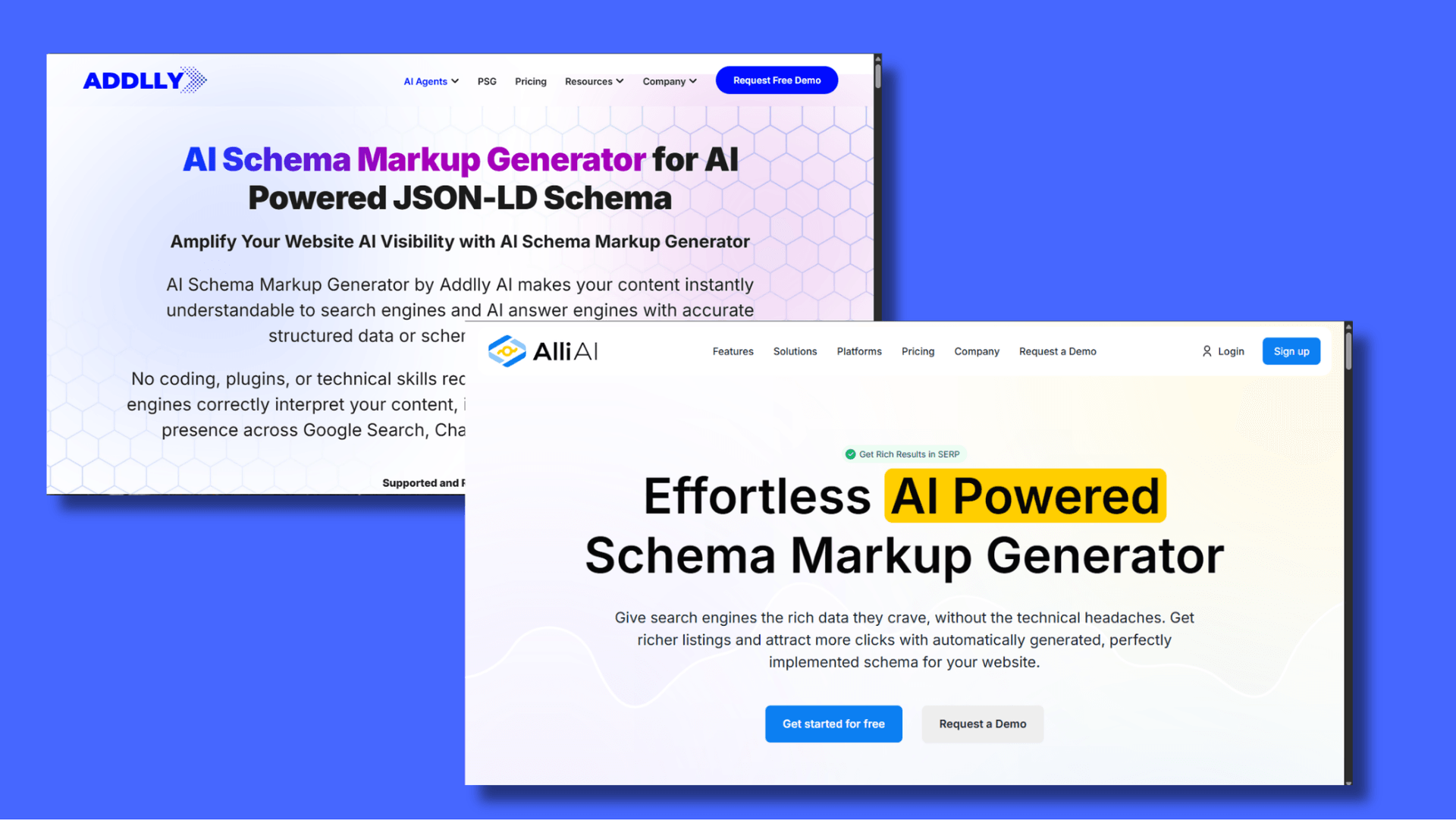
You can experience a more robust solution by using tools like Addlly.ai and Alli AI that blend advanced generation with built-in validation.
Pick one or two tools and stick with them. ChatGPT for tweaks + Google Rich Results Test for final go-live = a winning combo.
With clean, validated schema markup, your pages get better chances at rich snippets and AI spots.
Final Thoughts: Make Schema Markup Your Competitive Edge in AI Search
We’ve covered a lot in this guide.
From understanding why schema markup has become one of the strongest signals for both Google and AI search engines, to picking the right types, following best practices, avoiding common mistakes, and using free AI tools to build it fast.
The key takeaway is simple.
In 2025 and beyond, clean, detailed, structured data is no longer optional.
Use accurate markup for supported features and validate its implementation. Search appearance and citation outcomes remain uncertain.
Ready to do it with AI?
Head over to your site, open ChatGPT, and try the first prompt today.
Your content deserves to be found in classic search and the new AI answers.
Thanks for reading.
See you in the next guide on doitwithai.tools!
Generate JSON-LD and validate the actual page
Choose a supported schema type that fits the page. Enter real information rather than invented ratings, credentials, or results.
Generate the draft markup and compare its properties with visible content. Review required fields for the relevant Google-supported feature.
Use Google's Rich Results Test for supported rich-result features. Use the Schema.org validator to check schema vocabulary and syntax.
Passing a validator does not guarantee a rich result. Unsupported types can be valid without producing a Google search feature.
Check published markup after implementation. The generator creates code; it does not confirm that your website installed it correctly.
Google's AI search features do not require special schema. Focus on accurate content and relevant structured data.
Use the Schema Markup Generator
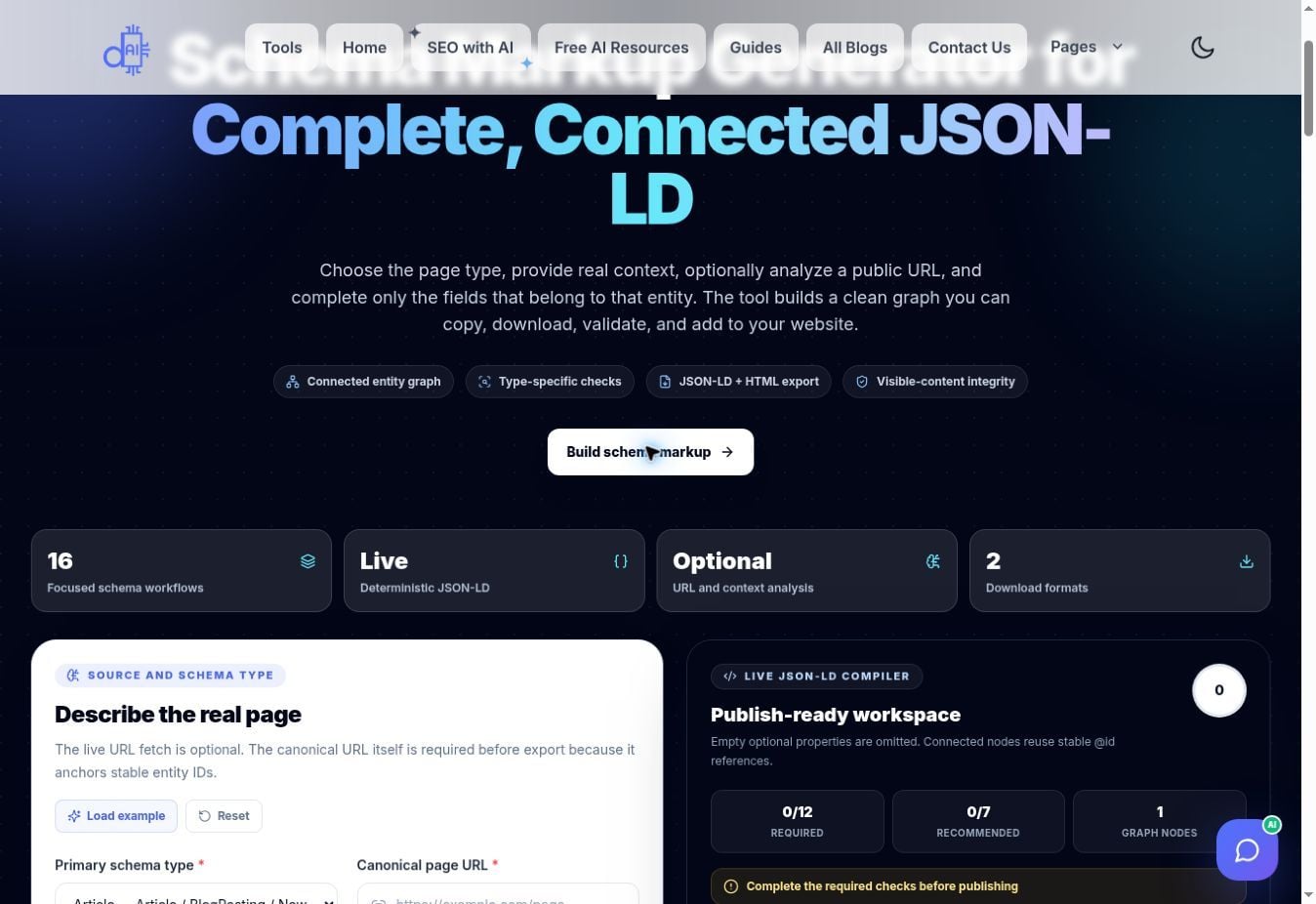
Tool interface captured on October 7, 2026. Use the linked tool for the current version.
Read the supporting official guidance
Source: Google's documentation updates confirm the removal of FAQ rich results in May 2026.